Over 2.3 million people search for some variation of 'twin flame or soulmate test' every month. That's not a niche spiritual curiosity — that's a massive, underserved audience trying to make sense of an intense relationship using whatever tools they can find online. And most of those tools are... let's say, inconsistent in quality.
I've spent years analyzing how people engage with relationship content, and the pattern is always the same: someone falls hard for a person, the connection feels different from anything before, and they immediately want a framework to understand it. Quiz, calculator, astrology chart — they'll try all three before breakfast. The question isn't whether these tools are useful. Some genuinely are. The question is what they're actually measuring and whether that matches what you're actually asking.
Before we get into the tool comparison, it helps to start with understanding what separates twin flame and soulmate connections — because if you're fuzzy on the distinction, no test result is going to clarify it for you.
Why People Turn to Tests to Identify Their Connection Type
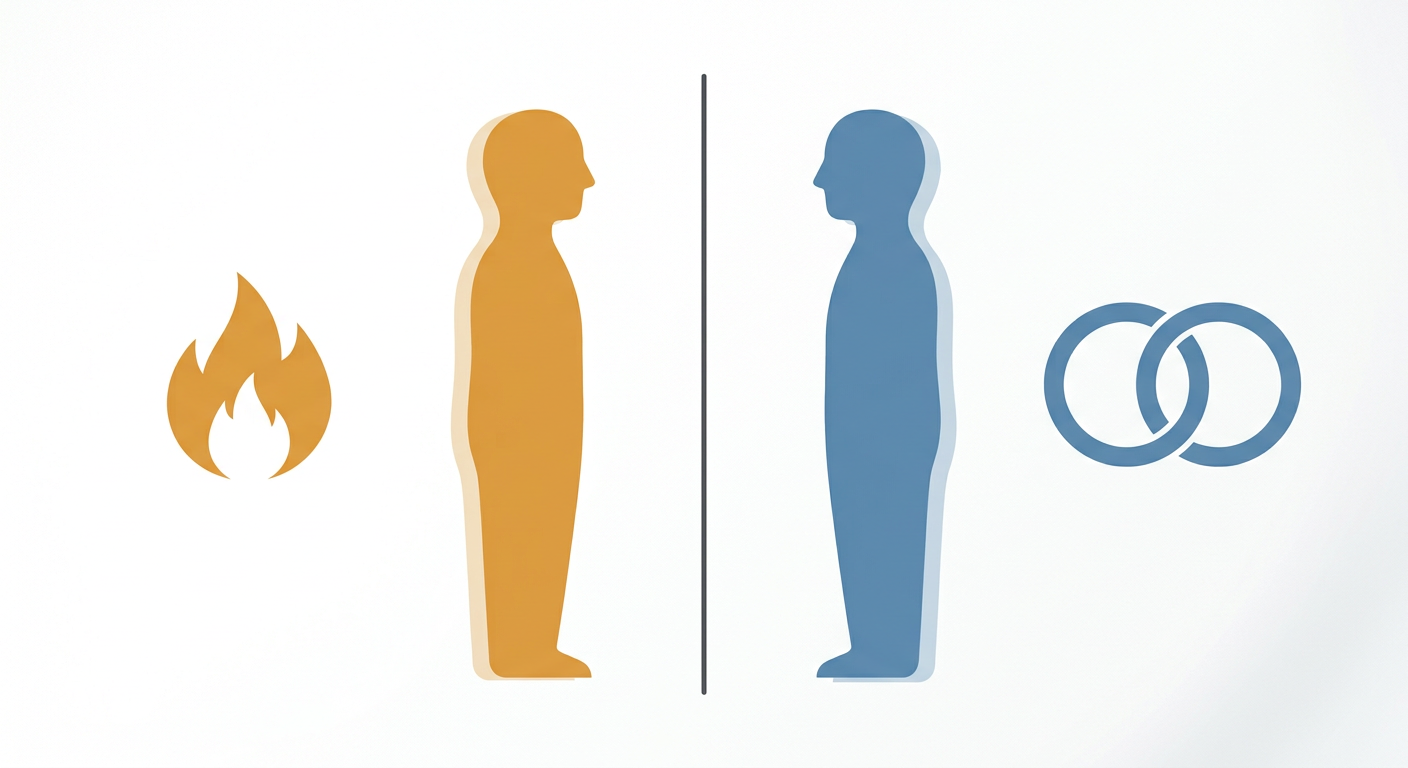
Here's the thing about intense relationships: they're disorienting. When someone walks into your life and rearranges your entire internal landscape, your brain wants a category for it. Is this a soulmate — deep, compatible, built for longevity? Or a twin flame — chaotic, transformative, possibly not meant to last in a conventional sense?
Tests feel like shortcuts to that answer. And honestly, that impulse isn't irrational. Pattern recognition tools have real value when used correctly. The problem is that most people approach these tests looking for confirmation rather than information. They want the quiz to say 'yes, this is your twin flame' and then treat that as settled fact.
So. Let's talk about what these tools actually do.
What a Twin Flame or Soulmate Test Actually Measures
Not all tests are built the same. There are three dominant formats you'll encounter, and they operate on completely different logic.
Quiz-Based Tests: Emotional Pattern Recognition
These are the most common format — a series of questions about how the relationship feels. Does this person trigger you? Do you feel like you've known them forever? Is the connection intense even when things are difficult?
What they're actually measuring: your perception of the relationship at this moment in time. That's not nothing. Self-report data on relationship intensity has real psychological validity — it's the basis of attachment research, after all. But it's also heavily influenced by where you are emotionally when you take the test. Take the same quiz during a honeymoon phase versus after a difficult argument and you'll likely get different results.
A well-designed relationship quiz can help you identify patterns you might not have articulated consciously. A poorly designed one is just telling you what you want to hear based on emotionally loaded questions.
Calculator-Based Tools: Name, Date, and Numerology Inputs
These pull from numerology compatibility frameworks — you enter names, birthdates, sometimes birth times, and the tool generates a compatibility percentage or category. Numerology life path numbers, expression numbers, and destiny numbers all get factored in depending on the sophistication of the tool.
If you want to go deeper on the numerology side specifically, numerology and love: what your life path number says about who you're compatible with breaks down exactly how these calculations work and where they hold up.
What they're actually measuring: mathematical relationships between numbers derived from personal data. Whether those numbers have spiritual significance is a matter of belief. What they do provide is a consistent, repeatable framework — the same inputs always produce the same output, which makes them useful for comparison rather than confirmation.
Astrology-Based Tests: Chart Comparison Approaches
This is the most methodologically complex format. A synastry calculator compares two full birth charts — not just sun signs, but the positions of Venus, Mars, the Moon, rising signs, and how they aspect each other. Some tools also generate composite charts, which treat the relationship itself as an entity with its own chart.
For a proper breakdown of which placements actually matter most in romantic compatibility, moon sign, Venus, Mars, rising: the four placements that actually drive romantic compatibility is worth reading alongside any astrology-based test you try.
What they're actually measuring: astrological tension and harmony between two charts. Twin flame astrology specifically looks for certain indicators — Chiron conjunctions, North Node connections, Pluto aspects — that suggest a relationship built around transformation and soul-level challenge. These aren't arbitrary; they're drawn from decades of astrological tradition.
What These Tests Get Right
Useful Frameworks for Self-Reflection
The best outcome from any twin flame or soulmate test isn't the label — it's the questions it forces you to sit with. Does this relationship feel reciprocal? Am I growing or just suffering? Is the intensity here because of genuine connection or because of anxious attachment?
A good soulmate calculator or relationship quiz essentially gives you a structured vocabulary for feelings that are hard to articulate. That has real value, even if the final 'result' is more symbolic than diagnostic.
Identifying Relationship Patterns You Might Miss
This is where I think these tools are genuinely underrated. When you answer 20 questions about a relationship, you're forced to confront things you might be glossing over in daily life. The quiz that asks 'does this person make you feel worse about yourself after most interactions?' isn't predicting your connection type — it's surfacing a pattern worth examining.
And try our love compatibility calculator for a data-driven starting point if you want a tool that approaches this through consistent scoring rather than vibes-based assessment.
What These Tests Cannot Determine
The Limits of Algorithm-Based Spiritual Assessment
Look, I'm going to be straight with you: no algorithm can confirm a spiritual bond. Twin flame theory, at its core, is a metaphysical framework — it posits that two souls originate from the same energetic source and are drawn together across lifetimes for mutual evolution. That's not something a name calculator can verify.
Even the most sophisticated synastry calculator is working with a model of reality. It can tell you that your Venus opposes their Mars (which suggests attraction with friction) but it cannot tell you whether that friction is twin-flame-level transformative or just... incompatibility.
Studies on relationship satisfaction consistently show that self-reported connection quality is a better predictor of relationship outcomes than any external compatibility metric — whether that's astrology, numerology, or personality typing. The felt experience matters more than the framework.
Why No Tool Can Confirm a Twin Flame Bond
Here's where I'll say something that might be unpopular: the twin flame label is particularly resistant to external validation because its defining characteristics include contradiction. Twin flames are supposed to feel simultaneously like home and like chaos. The relationship is supposed to be difficult because it's significant. That creates a framework where almost any intense relationship can be retrofitted into the twin flame narrative.
A test that asks 'is this relationship intense and transformative?' will flag most early-stage romantic obsessions as potential twin flame connections. That's not useful — it's just confirmation bias with extra steps.
For a grounded reality check on this, the twin flame vs soulmate Reddit insights compared piece does a good job of showing how real people apply (and misapply) these labels in practice.
How to Use a Test Responsibly
If you're going to use these tools — and honestly, there's nothing wrong with that — here's how to get actual value from them:
Treat results as prompts, not verdicts. If a quiz says you have 'soulmate energy,' ask yourself what specific answers led to that result. The questions are more useful than the label.
Use multiple formats. A quiz, a numerology calculator, and a synastry tool will each surface different aspects of the relationship. Convergence across tools is more interesting than any single result.
Note your emotional reaction to the result. If the tool says 'soulmate' and you feel disappointed because you wanted 'twin flame,' that reaction tells you something about what you're actually looking for.
Retake tests at different points in the relationship. Your perception of the connection will shift over time, and tracking that shift is genuinely informative.
Don't use results to justify staying in harmful situations. This is the big one. The twin flame framework has a documented pattern of being used to rationalize relationships that are actually toxic. 'The chaos is part of the journey' is a meaningful spiritual concept and also a sentence that gets used to excuse genuinely bad behavior.
The Better Questions to Ask Instead of 'Is This My Twin Flame?'
After eight years of watching people engage with relationship content, I'm convinced the search for a label is usually a proxy for something more specific. Here are the questions that actually get at what people want to know:
Does this person bring out growth or regression in me? Twin flame connections are theoretically growth-oriented, even when painful. If you're consistently becoming a smaller version of yourself, that's not a spiritual test — it's a problem.
Is the intensity here because of genuine resonance or because of unavailability? Anxious attachment creates intensity that mimics twin flame energy almost perfectly. A therapist will catch this faster than any online test.
What would I do if I knew for certain this wasn't a twin flame? That hypothetical reveals what you actually want from the relationship independent of the label.
Am I using this framework to avoid a direct conversation with this person? Sometimes the quiz is a substitute for just... asking them how they feel.
For a deeper look at how astrology can help frame some of these questions, twin flame vs soulmate astrology explained is worth a read — it gets into the specific chart indicators that astrologers actually use, which is more nuanced than most online tools reflect.
Comparing the Three Test Formats: Honest Capability Assessment
| Strategy | Best For | Pros | Cons | ROI |
|---|---|---|---|---|
| Quiz-Based Test | Emotional pattern recognition, self-reflection prompts | Accessible, no technical knowledge needed, surfaces unconscious perceptions | Highly subjective, results shift with mood, easily gamed | High for self-awareness, low for objective assessment |
| Numerology Calculator | Consistent framework comparison, repeatable inputs | Same inputs = same output, grounded in a systematic tradition, fast | Spiritual validity is belief-dependent, ignores relational dynamics entirely | Medium — useful as one data point among several |
| Synastry/Astrology Tool | Chart-level compatibility analysis, identifying tension patterns | Most methodologically complex, draws on centuries of tradition, can identify specific dynamic types | Requires accurate birth times, steep learning curve, still interpretive | High for pattern identification if you understand the framework's limits |
Our Recommendation: Combining Tools With Personal Reflection
No single test format is going to give you a definitive answer on whether someone is your twin flame or soulmate. But that's not actually a failure of the tools — it's a feature. The most valuable use of these tests is as structured prompts for self-reflection, not as oracles.
Here's what I'd actually recommend: start with a relationship quiz to surface your emotional patterns, cross-reference with a numerology compatibility check for a different analytical angle, and if you're serious about the astrology side, invest in a proper synastry reading rather than relying on a free online tool that only compares sun signs.
And then — this is the part most people skip — sit with what you find. Not to confirm a label, but to understand what you actually want from this connection and whether this specific person is positioned to provide it.
For anyone trying to figure out which approach suits their actual question, which is stronger: twin flame or soulmate explained addresses the underlying conceptual question that most tests are trying (and failing) to answer definitively.
The tools are useful. The labels are less important than you think. And the most revealing test of any relationship isn't a quiz — it's time, consistency, and whether you're both showing up for each other when it's inconvenient.
Start somewhere concrete: try our love compatibility calculator for a data-driven starting point and use what it surfaces as a conversation starter with yourself, not a verdict.