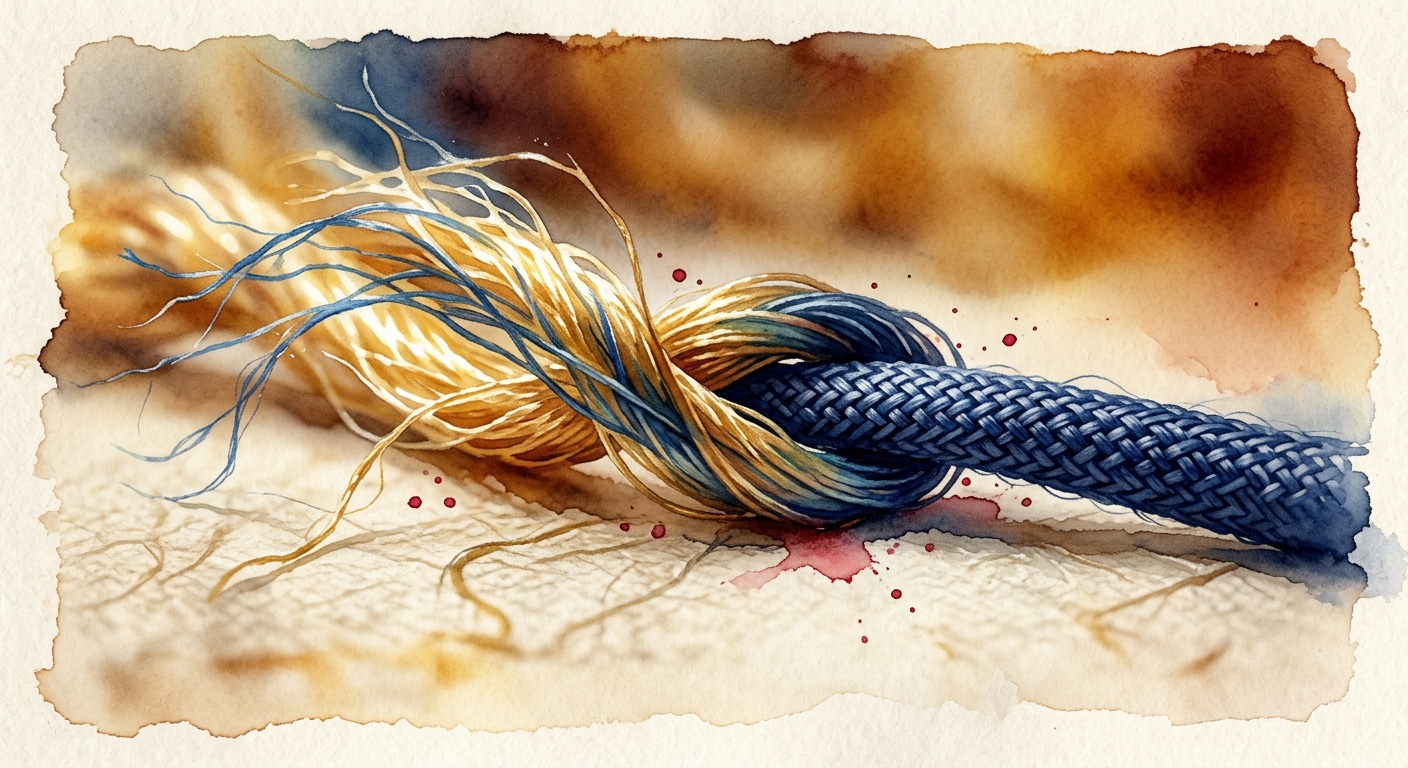
Why People Ask Which Connection Is 'Stronger'
Somewhere along the way, we absorbed a cultural story that equates pain with meaning. The harder something feels, the more it must matter. The more electric a connection, the more 'real' it must be. And nowhere does this show up more clearly than in the debate over twin flames versus soulmates.
People searching for 'which is stronger — twin flame or soulmate' are often in the middle of something intense. Maybe they're trying to make sense of a relationship that both thrills and destabilizes them. Maybe they're wondering if the calm, consistent love they have is somehow less significant than the chaotic one they left behind. These are real, valid questions — and they deserve a real answer.
But here's the thing: the framing of the question itself contains a hidden assumption. That 'stronger' is a single, measurable quality. That two very different kinds of relational experiences can be lined up and ranked. They can't — at least not without first asking: stronger for what?
To understand what actually separates a twin flame from a soulmate, you need to look at both the spiritual definitions and the psychological reality. And when you do, the answer to 'which is stronger' gets a lot more interesting.
Common Misconceptions About Twin Flames and Soulmates
Myth 1: Twin flames are always romantic partners. The twin flame concept, rooted in spiritual traditions, describes a soul-level mirror — someone who reflects your unresolved patterns back at you. That doesn't have to be a romantic partner. It's often described as a catalyst for growth, not a companion for life.
Myth 2: Soulmates are just comfortable, ordinary relationships. This one bothers me, honestly. Soulmates get demoted in popular culture to something safe but uninspiring — the 'nice but not exciting' option. In reality, a soulmate connection can be deeply passionate, emotionally rich, and profoundly fulfilling. The difference is that the connection tends to feel supportive rather than destabilizing.
Myth 3: If it doesn't hurt, it's not deep. This is the most dangerous misconception of all, and we'll come back to it. For now: intensity of feeling is not a reliable indicator of relational value.
How Twin Flame Intensity Is Typically Defined
The twin flame experience is almost universally described in terms of extremes. An immediate, almost disorienting sense of recognition. A feeling that this person knows you in ways nobody else ever has. And then, typically, turbulence.
The Role of Shared Wounds and Mirroring
One of the defining features of the twin flame dynamic is the 'mirror effect.' The idea is that your twin flame reflects your deepest fears, insecurities, and unhealed wounds back at you — not to hurt you, but to force growth. And it often works. People in twin flame connections frequently report significant personal transformation.
But here's what's worth noting: that mirroring process is painful by design. It surfaces things you'd rather not see. And for people who already carry anxious or disorganized attachment patterns — the two styles most associated with early relational trauma — a twin flame dynamic can feel intensely familiar in ways that aren't healthy.
Attachment theory, developed by John Bowlby and expanded by researchers like Mary Ainsworth, gives us a useful lens here. People with anxious attachment are drawn to relationships that confirm their fears: that love is uncertain, that connection requires constant effort, that they might be abandoned. A twin flame connection — with its cycles of union, separation, and reunion — can mirror that pattern almost perfectly. So the intensity isn't just spiritual. It's also neurological.
Why Intensity Doesn't Always Mean Compatibility
Psychologists have a name for that breathless, can't-eat, can't-sleep feeling: limerence. First described by psychologist Dorothy Tennov in the 1970s, limerence is an involuntary state of intense romantic longing, often characterized by obsessive thinking, emotional dependency, and an exaggerated sensitivity to the other person's cues. It feels like love. It feels like destiny. But research suggests it's a neurochemical state — elevated dopamine and norepinephrine, suppressed serotonin — that tends to fade within 18 to 36 months regardless of how 'meant to be' the connection feels.
So when someone describes their twin flame as the most intense relationship they've ever had, they may be describing limerence. And limerence, by its nature, is not a stable foundation.
How Soulmate Strength Manifests Differently
Endurance, Stability, and Long-Term Bond Depth
Soulmate connections are often described with words like 'ease,' 'comfort,' and 'home.' And culturally, we've been trained to undervalue those words. But from an attachment theory perspective, they're describing something extraordinarily valuable: a secure base.
Secure attachment — the style associated with consistent, responsive caregiving in childhood and with healthy adult relationships — is the single strongest predictor of long-term relationship satisfaction according to decades of research. People in securely attached relationships report higher trust, better communication, greater resilience during conflict, and more sustained intimacy over time.
That's not weakness. That's durability. And soulmate durability is a form of strength that doesn't get nearly enough credit.
The Quiet Power of a Soulmate Connection
I think the soulmate connection often goes underappreciated precisely because it doesn't create crisis. It doesn't demand your constant attention. It doesn't generate the kind of longing and relief cycles that flood your brain with dopamine. And because it doesn't feel like a rollercoaster, people sometimes wonder if they've 'settled.'
They haven't. What they've found is something rarer and more sustainable: a relationship that supports growth without requiring destruction as the price of admission. (And if you're not sure where your current connection falls on this spectrum, it's worth exploring — explore your relationship strength with our compatibility calculator to get a clearer picture.)
Reframing the Question: Stronger for What Purpose?
Strength for Transformation vs. Strength for Partnership
Here's the reframe that I think actually helps people: twin flames and soulmates serve different functions. Asking which is 'stronger' is a bit like asking whether a chisel or a foundation is more important in building a house. They do different things.
Twin flame bonds, at their best, are transformative. They push you to confront the parts of yourself you've been avoiding. They can catalyze enormous personal growth, accelerate self-awareness, and fundamentally shift how you move through the world. That's genuinely powerful — even when (especially when) the relationship itself doesn't last.
Soulmate bonds, at their best, are generative. They create the conditions for sustained flourishing: safety, mutual support, shared vision, and the kind of trust that compounds over years. This is the strength that shows up not in a single dramatic moment but in ten thousand ordinary ones.
So which is stronger? It depends entirely on what you need — and when.
What Research and Psychology Say About Relationship Intensity
Studies on relationship longevity consistently find that initial intensity is a poor predictor of long-term success. Research published in peer-reviewed psychology journals has shown that couples who report moderate rather than extreme emotional intensity early in their relationship tend to demonstrate greater stability and satisfaction five to ten years later.
This tracks with what we know about attachment. Relationships built on anxious or avoidant dynamics — which often produce the push-pull intensity associated with twin flame connections — tend to have higher rates of conflict, lower rates of mutual satisfaction, and greater likelihood of dissolution. Meanwhile, securely attached couples — more characteristic of the soulmate dynamic — show up consistently as the most functional across cultures and demographics.
You might also find it illuminating to look at how astrological frameworks approach this question. Moon sign, Venus, Mars, and rising sign placements can reveal a lot about whether two people's emotional needs are actually compatible — beyond the initial spark.
The Danger of Equating Pain With Depth
This is the part I feel most strongly about. The idea that suffering proves love — that if it hurts, it must be real — is not just philosophically wrong. It's actively harmful.
Relationships that are characterized by cycles of intensity and withdrawal, by the constant hope that things will finally stabilize, by the sense that you have to earn love or keep earning it — these patterns are associated with emotional dysregulation, anxiety, and diminished self-worth over time. The fact that they feel profound doesn't mean they are good for you.
And look, I'm not dismissing the genuine transformative power that some twin flame connections carry. But transformation that comes at the cost of your mental health isn't a badge of depth. It's a signal worth paying attention to.
If you're trying to make sense of which kind of connection you're in, it can help to read about the specifics — including how twin flame vs. soulmate tests compare in practice — rather than relying on the intensity of feeling alone as your guide.
Final Verdict: Neither Is Universally Stronger — Here's Why
The twin flame bond is stronger for transformation. The soulmate bond is stronger for partnership. And actually, the most complete relational lives tend to include both experiences — sometimes in the same person, more often across different relationships and different seasons of life.
The question 'which is stronger' is worth asking — not because there's a clean answer, but because it reveals what you're really looking for. If you're chasing intensity, it's worth asking why. If you're craving stability, it's worth honoring that instead of dismissing it as settling.
Psychology gives us the tools to stop conflating pain with meaning, and to start evaluating our relationships by what they actually produce in our lives: growth, yes — but also security, joy, and the kind of love that doesn't require constant crisis management to feel real.
And if you're genuinely curious about the mechanics of compatibility — what makes two people's emotional and relational styles click or clash — there's a lot to explore. You might start with what a compatibility score actually tells you or dig into the best twin flame and soulmate calculator guides available. Either way, the goal isn't to find which connection is stronger. It's to find which connection is right for you — and to build it with as much clarity and intention as you can.