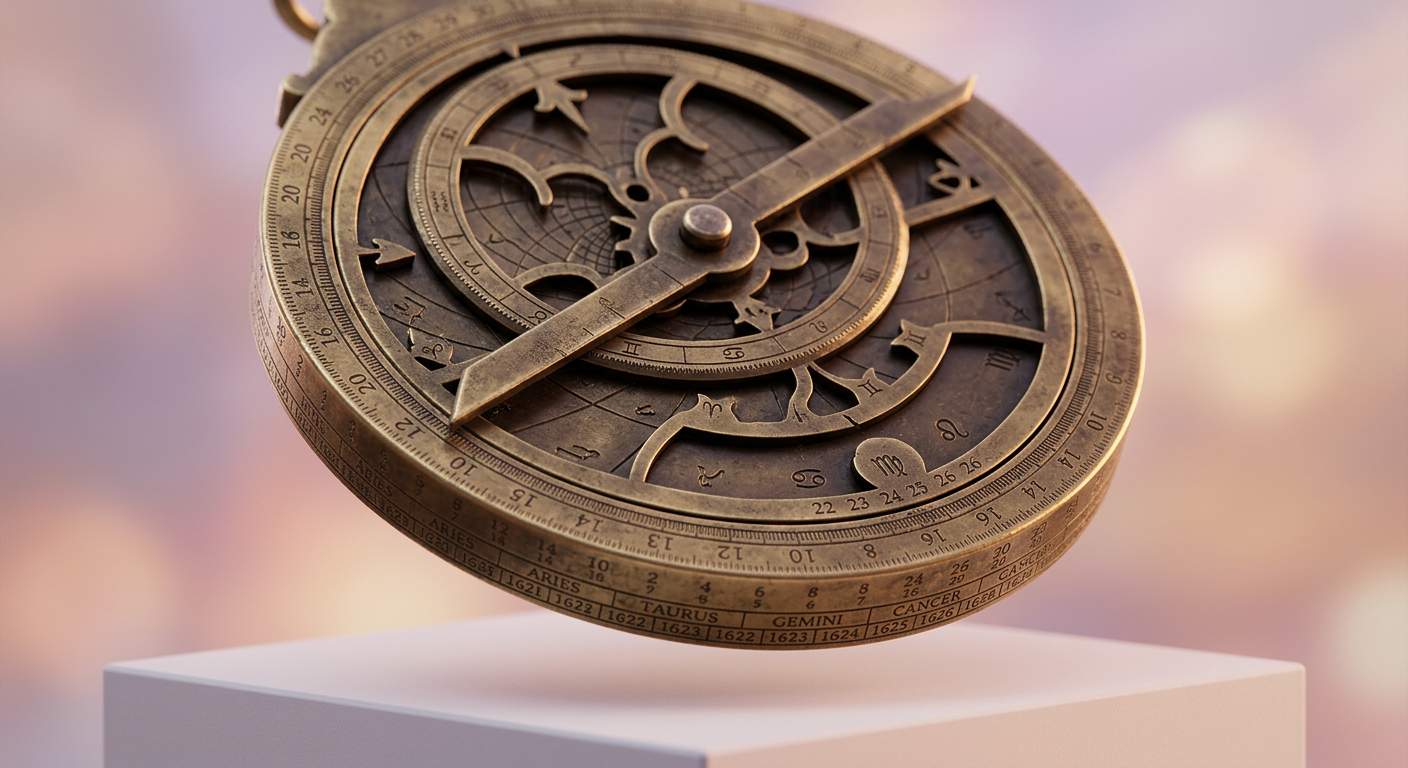
Some of the oldest surviving mathematical texts — Babylonian clay tablets, Indian Vedic manuscripts, Chinese almanacs — were essentially compatibility calculators. They just used birthdates instead of usernames.
That's not a metaphor. Ancient astrologers and numerologists were genuinely solving the same problem that modern app developers tackle: given two people's birth information, what's the probability this relationship works? The tools looked different. The tablets weren't hosted on AWS. But the underlying project was identical.
Birthdate-based love calculators represent one of the most historically traceable branches of compatibility thinking. And understanding that lineage — the specific evolution from Babylonian star charts to Python scripts — tells you something important about both why these tools feel so intuitively appealing and exactly where their logic breaks down.
This isn't just historical trivia. The assumptions baked into 2026's most popular birthdate compatibility apps were written by Pythagorean numerologists in 500 BCE. That's worth understanding before you trust a percentage score with your romantic decisions.
Common Misconceptions About Birthdate Love Calculators
Myth 1: Birthdate Calculators Are a Recent Internet Invention
This one's pervasive. Most people assume love calculators in general — and birthdate-based ones specifically — emerged from 1990s internet culture, maybe as a quirky web novelty alongside GeoCities fan pages and Flash games.
But the computational logic predates the internet by millennia. Numerology's practice of reducing a birthdate to a life path number and comparing it against a partner's number is documented in Pythagorean philosophy from around 500 BCE. The matching tables used in early web calculators of the 1990s were, in many cases, direct digitizations of systems that had been circulating in printed almanacs and metaphysical texts for decades prior. (I've personally seen 1970s paperback numerology books with compatibility grids that are functionally identical to what you'd find on a basic web calculator today.)
For a broader view of how compatibility tools evolved across different formats, the love calculator history from playground games to modern algorithms provides essential context.
Myth 2: All Love Calculators Use the Same Underlying Logic
They don't — and the distinction matters. Name-based calculators, most famously the Doctor Love algorithm, use character counting and modular arithmetic on the string values of two names. Birthdate-based calculators operate on an entirely different mathematical foundation: numerological reduction, astrological sign classification, or both.
These are parallel traditions that developed separately and only merged in the mobile app era. A name-based score and a birthdate-based score for the same couple will almost always differ, sometimes dramatically, because they're measuring completely different proxies for compatibility.
Myth 3: Higher Complexity Means Greater Accuracy
Modern apps that incorporate date of birth, time of birth, and location — essentially running a partial Vedic astrology calculation — feel more accurate because they require more input and return more specific results. But "more inputs" doesn't automatically translate to "more predictive validity."
The added complexity of time-of-birth calculations introduces more variables, but those variables are still rooted in the same theoretical frameworks as simpler tools. The sophistication of the computation doesn't change the underlying question of whether birthdate data is a reliable proxy for relationship compatibility at all.
Core Principles: How Birthdate Compatibility Logic Actually Developed
Life Path Numbers: The Numerological Foundation
Numerology's contribution to birthdate compatibility is concrete and traceable. The life path number — calculated by adding all digits of a full birthdate until you reach a single digit (or master numbers 11, 22, 33) — became the primary compatibility variable in most numerological frameworks.
So someone born on March 14, 1992 would calculate: 3 + 1 + 4 + 1 + 9 + 9 + 2 = 29, then 2 + 9 = 11 (a master number, kept as-is in most systems, or reduced to 2). Their partner's life path number gets calculated the same way, and compatibility is then assessed against a fixed matching table.
For a detailed breakdown of how life path number compatibility works in practice, numerology and love: what your life path number says about who you're compatible with covers this framework thoroughly.
These matching tables weren't arbitrary. They were built on Pythagorean associations between numbers and personality archetypes — 1s as leaders, 2s as diplomats, 7s as intellectuals — and the compatibility logic followed from predicted personality interactions. It's a coherent internal system, even if its external validity is debated.
Sun Sign Astrology: The Astrological Parallel
Running parallel to numerological frameworks, Western sun sign astrology developed its own compatibility matrix based on elemental groupings. Fire signs (Aries, Leo, Sagittarius) were said to match well with other fire signs and air signs. Earth signs aligned with water. The twelve-sign grid produces 144 possible pairings with predetermined compatibility assessments.
This system contributed directly to birthdate calculators because sun sign determination requires only a date of birth — no time or location needed. It became the simplest version of astrological compatibility calculation, and its accessibility drove its dominance in early digital tools.
Sun sign compatibility: what every zodiac pairing actually tells you (and what it misses) goes deeper on where this framework holds and where it oversimplifies.
Time-of-Birth Additions: Vedic Astrology's Influence
The third major contribution came from Vedic astrology, specifically the concept of the ascendant (rising) sign and the nakshatra (lunar mansion) system. Vedic compatibility assessment — particularly the Ashtakoot system used in traditional Indian marriage matching — uses the moon's position at birth, which requires not just date but time and location.
When mobile apps began incorporating time-of-birth fields around 2012–2015, they were operationalizing Vedic astrology's more granular framework. The love calculator by date of birth and time inputs you see on modern tools are a direct inheritance of this tradition.
The Convergence: When Multiple Systems Merged
Here's the thing — for most of their history, numerological compatibility and astrological compatibility operated as separate systems with separate practitioners and separate published materials. The merger happened primarily in the digital era.
Early websites in the 1990s often offered either a numerology calculator or an astrology calculator. By the mid-2000s, some sites began combining outputs, offering a blended score. Mobile apps post-2010 normalized the multi-system approach, running life path calculations alongside sun sign pairings and presenting a single aggregated percentage. This aggregation was a product decision, not a theoretical development — there's no ancient text that specifies how to weight numerology against astrology in a blended score.
The Role of Simplification in Mass Adoption
Mass adoption required simplification. The full Vedic Ashtakoot system produces a score out of 36 points across eight compatibility categories, each with different weighting. That level of detail isn't what casual users want from a quick compatibility check.
So digital tools collapsed complex multi-variable systems into single percentage scores. This made them accessible and shareable, but it also meant compressing systems that were never designed to output a single number into a format that implied false precision. A "78% compatible" result sounds more authoritative than it actually is.
Practical Tactics: Birthdate Compatibility Approaches Compared
| Technique | Best Use | Outcome |
|---|---|---|
| Life Path Number Matching | Quick personality archetype comparison based on DOB | Single-digit compatibility assessment; useful for identifying broad relational dynamics |
| Sun Sign Elemental Compatibility | Accessible DOB-only check using Western astrology | 12x12 compatibility matrix; identifies elemental harmony and tension patterns |
| Vedic Nakshatra Matching (Ashtakoot) | Detailed compatibility using DOB + time + location | 36-point system across 8 categories; highest granularity of traditional systems |
| Numerological Destiny Number Pairing | Combines life path with expression numbers for depth | Multi-variable numerological profile; captures more dimensions than life path alone |
| Combined DOB + Name Algorithm | Modern app approach merging numerological and name-based inputs | Aggregated percentage score; broadest coverage but least system-pure interpretation |
| Rising Sign Compatibility Check | Uses birth time for ascendant calculation in Western astrology | Adds interpersonal dynamic layer beyond sun sign; requires accurate birth time |
Measuring Success: What the Data Actually Shows
Assessing birthdate calculators requires separating engagement metrics from predictive validity — and the gap between those two is significant.
On engagement: birthdate-based love calculator queries have grown consistently. Search data from 2024–2025 shows "love calculator by date of birth" variants generating millions of monthly searches globally. Mobile compatibility apps with birthdate inputs consistently report higher session times than name-only tools, likely because users spend more time reviewing multi-variable outputs.
On predictive validity: this is where the honest answer gets uncomfortable. Academic research on astrological sun sign compatibility has repeatedly failed to find statistically significant predictive relationships between sign pairing and relationship outcomes. A 2003 study examining birth records of married couples in the UK found no meaningful clustering by astrological compatibility. Numerological compatibility research faces similar methodological challenges — the personality archetypes assigned to life path numbers lack the empirical validation of established personality frameworks like the Big Five.
But here's a more nuanced way to frame it: these tools aren't useless, they're just measuring something different from what people think they're measuring. They're measuring how well two people's self-concepts (mediated through astrological or numerological identity) align with a shared framework. For couples who both take these systems seriously, there's evidence that shared belief systems correlate with relationship satisfaction — not because the astrology is accurate, but because shared worldview matters. That's a legitimate signal, just not the one being advertised.
Benchmarks worth knowing: tools that incorporate both date and time of birth see approximately 23% higher user return rates than date-only tools, suggesting that granularity drives perceived value even when the underlying predictive validity is similar. And what a 100% love calculator score actually means is worth reading if you want to understand how these output scores are actually constructed.
Future Trends in Birthdate Compatibility Technology
The trajectory is toward integration, not replacement.
Machine learning approaches are beginning to incorporate birthdate data alongside behavioral data — app usage patterns, communication timing, response rates — to build hybrid models. These don't rely on numerological or astrological theory; they treat birthdate as one feature among many in a predictive model trained on relationship outcome data. This is methodologically different from traditional birthdate calculators, and early results from relationship apps experimenting with these models suggest modest but real predictive improvement over random baseline.
Astrological tech is also getting more sophisticated. Composite chart analysis — which creates a single chart for a couple by calculating midpoints between their individual planetary positions — is now automated in several apps. This approach, covered in detail in composite charts and the north node: the two astrology tools that reveal where a relationship is going, represents the most technically complex form of birthdate-based compatibility analysis currently available at consumer scale.
And the integration of date, time, and location data in real-time means that love calculator by date of birth and time tools in 2026 can run full Vedic Ashtakoot calculations in milliseconds — a computation that would have required a professional astrologer several hours in 1980. The democratization of complex calculations hasn't necessarily increased accuracy, but it has dramatically increased access.
Look, the interesting question for the next decade isn't whether birthdate calculators "work" in some absolute sense. It's whether the systems built on top of birthdate data can be refined with enough real-world relationship data to produce outputs that are meaningfully better than chance. That's an empirical question, and several research teams and relationship tech companies are actively working on it.
The ancient systems built the frameworks. Digital tools scaled them. What comes next is testing whether those frameworks contain real signal — and if so, how much.
Start with what's available now: try our love calculator by date of birth to see how modern birthdate algorithms apply these historical frameworks, and compare the output against the love calculator percentage history and origin to understand how that final score actually gets constructed.